
For decades, Bangladesh has remained one of the most underrepresented countries in the global creative industry.
While the country has produced talented agencies, marketers, and creatives; international recognition at the world’s biggest award shows has been relatively rare. Compared to many of its regional neighbours, Bangladesh has had only a limited presence on the global festival circuit.
Over the past two years, however, that has begun to change.
Two projects from independent agency POP5: Shopnodhora Plot Farming and DBL TileChalk; have earned recognition across some of the world’s most respected creative competitions, including D&AD, The One Show, MAD STARS, ADFEST, Spikes Asia, PHNX Awards, and The ANDYs.
Together, the two projects have accumulated 17 international recognitions, including 10 wins and 7 shortlists.
What makes this achievement notable is that both ideas were built around uniquely Bangladeshi challenges.
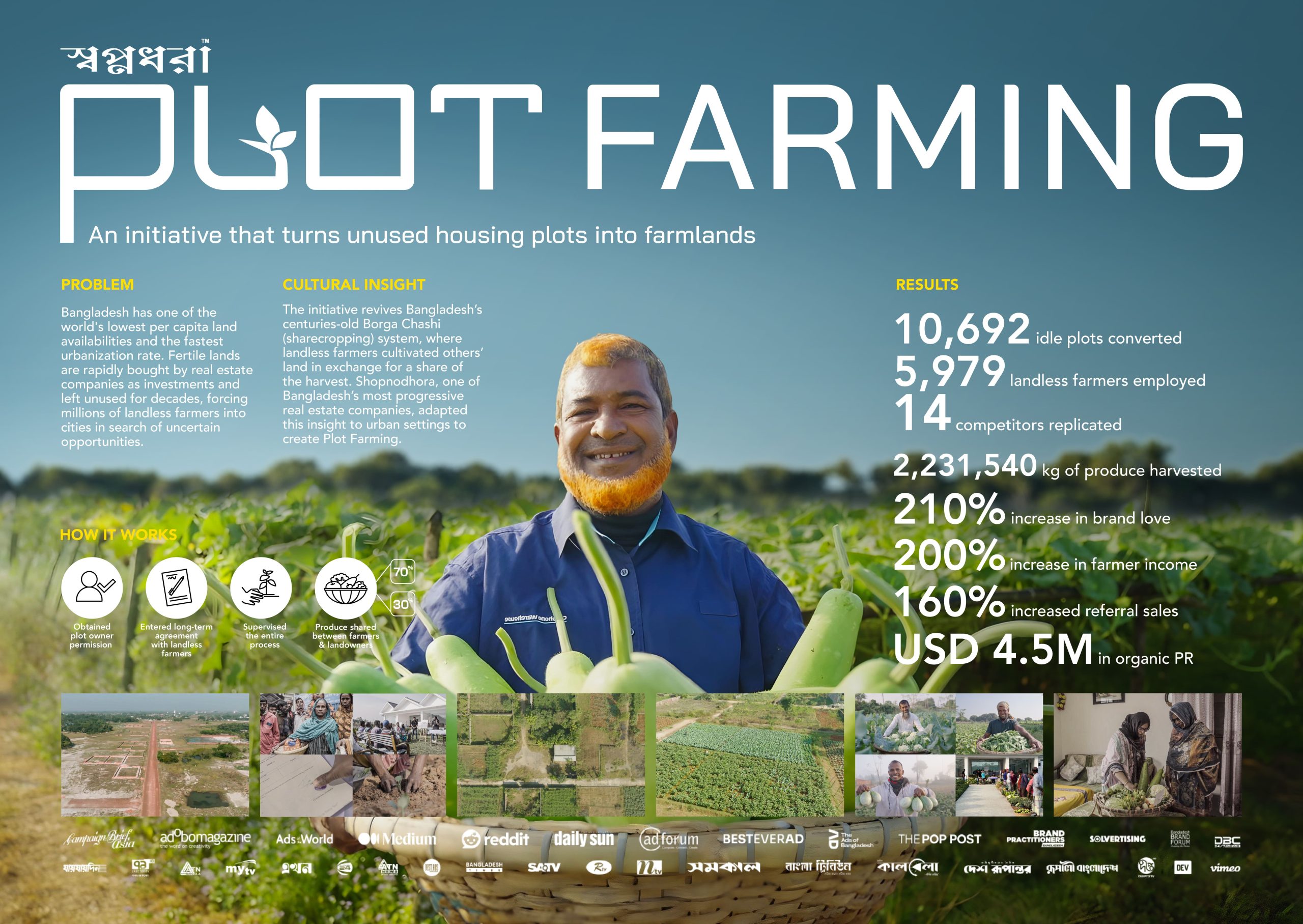
Shopnodhora Plot Farming
Bangladesh is one of the world’s fastest urbanising nations. As cities expand, large amounts of residential land remain vacant for years while waiting for development. At the same time, millions of landless farmers struggle to secure sustainable livelihoods.
Plot Farming by Shopnodhora Assets Development was created to connect these two realities.
The initiative transformed idle residential plots into productive farmland by enabling landowners and landless farmers to participate in a modern sharecropping model, a model that was supervised by Shopnodhora. Vacant land became a source of food production, employment, and income generation.
The project went on to receive international recognition across six major global festivals: a Graphite Pencil at D&AD, a Grand Prix and a Gold award at MADSTARS, a Bronze award at the AdForum PHNX Awards, a Bronze Spike at Spikes Asia, two shortlists at The One Show, and a shortlist at The ANDYs.
In total, Plot Farming earned eight international recognitions.
DBL TileChalk
DBL TileChalk addressed another challenge rooted in Bangladesh. The country’s ceramic industry generates significant amounts of sludge waste every year. Managing this waste is both costly and environmentally challenging. At the same time, educational materials such as classroom chalk continue to require affordable and sustainable sources of raw material.
Developed with DBL Ceramics, TileChalk transformed ceramic sludge into classroom chalk, creating value from industrial waste while supporting education and circular manufacturing.
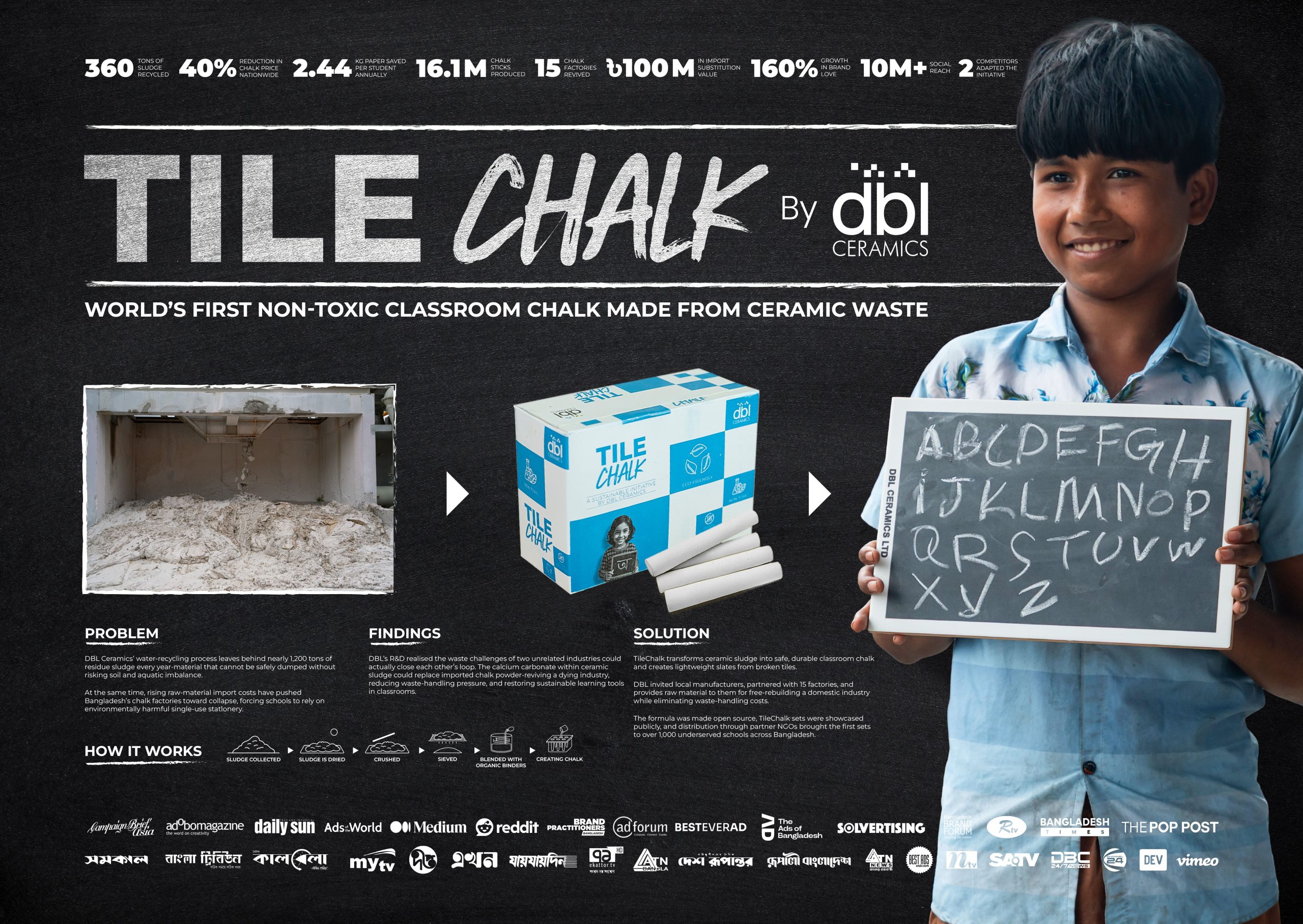
The project also attracted significant international attention, receiving recognition across six major global festivals: a Silver Lotus and a shortlist at ADFEST, two merit awards and a shortlist at The One Show, a Bronze award and a shortlist at the AdForum PHNX Awards, a Bronze Spike at Spikes Asia, and a shortlist at The ANDYs Awards.
In total, DBL TileChalk earned nine international recognitions.
A New Story for Bangladesh
The significance of Shopnodhora Plot Farming and DBL TileChalk extends beyond awards. Both projects demonstrate that globally recognised creativity does not need to originate from global trends. Instead, it can emerge from local realities, local insights, and local challenges.
Neither idea was created with international juries in mind. Both were designed to solve real problems affecting Bangladeshi communities, industries, and livelihoods.
Yet those same ideas resonated with juries across Asia, Europe, and North America because they shared qualities that transcend geography: originality, relevance, and meaningful impact.
Their success also challenges the belief that international recognition belongs exclusively to large agency networks with global resources. The agency behind both projects, POP5, was founded in 2024 and remains independent.
For a country that has historically been underrepresented on the world’s biggest creative stages, the achievements of Shopnodhora Plot Farming and DBL TileChalk represent more than individual project success.
They are evidence that Bangladeshi creativity is increasingly capable of competing on the global stage.
As the industry looks toward future festivals, including Cannes Lions, these projects offer a compelling reminder: some of the world’s most relevant ideas can emerge from places that the world has not yet fully noticed.
Bangladesh may be one of those places.