
In today’s fast-moving, hyper-connected world, building a brand goes far beyond product and pricing—it’s about culture, storytelling, and global relevance. For Asian brands looking to enter Europe, a market shaped by decades of legacy players, success requires more than strategy. It demands cultural understanding, creative confidence, and the ability to translate identity across borders.
I, Shamima Nasrin Sumi, Founder & Chief Editor of Best Ever Ad, interviewed Sven Rebholz and Franziska Spiess of Jung von Matt, who shared valuable perspectives on how Asian brands can succeed in Europe—by staying true to their roots while leveraging global collaboration and powerful, culturally resonant storytelling.
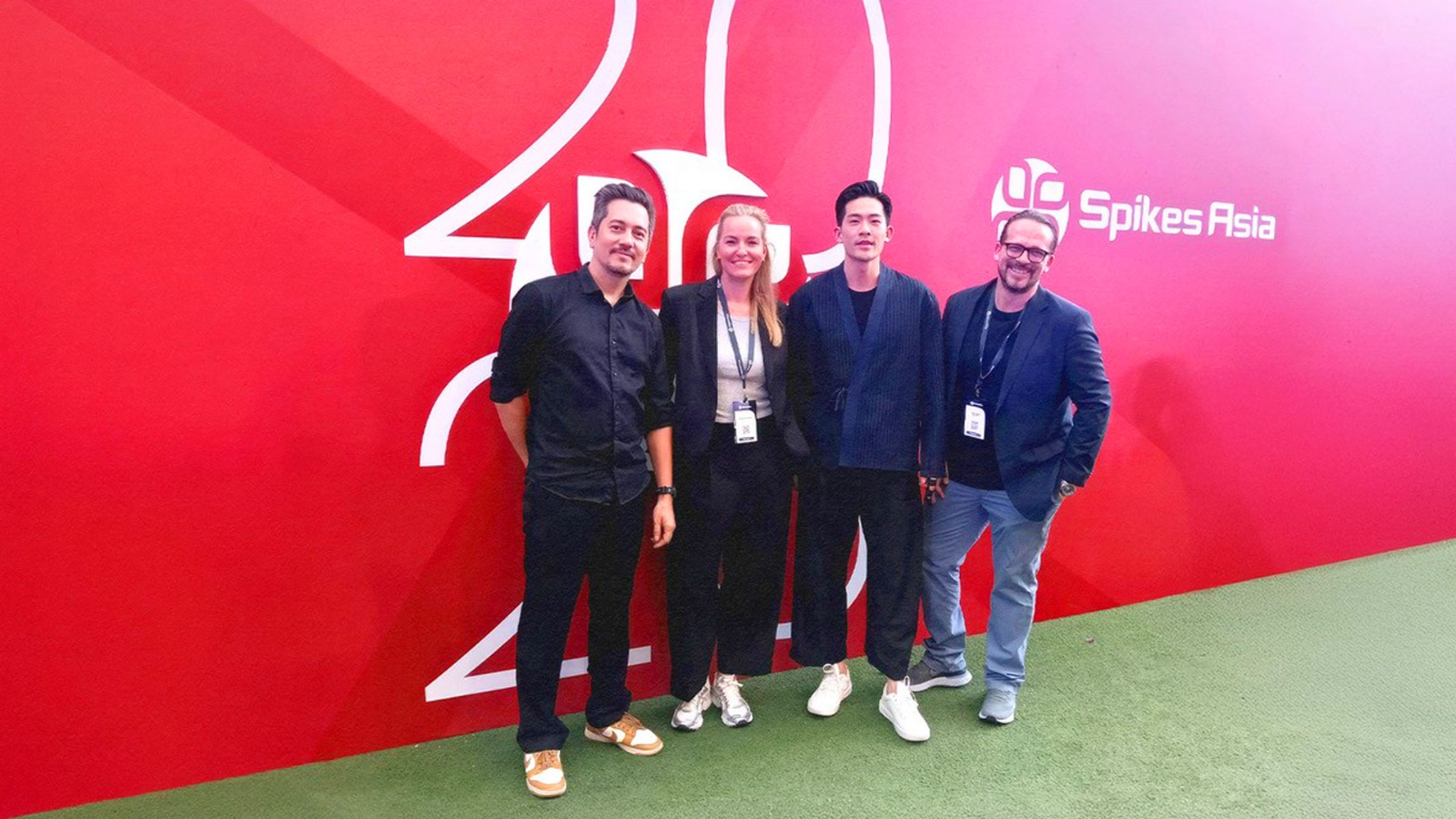
- We met you, along with two other Jung von Matt colleagues – Thanh Dao and Martin Zhang – at the Spikes Asia Festival, where the photo accompanying this article was taken. What does this group represent?
Sven Rebholz: It’s a small reflection of how Jung von Matt works today. Creativity today moves much faster across borders than organisations traditionally do. Culture, platforms and audiences evolve globally almost in real time. To navigate that environment, you need teams that are genuinely connected across markets – not just structurally, but culturally.
The four of us represent different parts of the network across Europe and Asia: Thanh Dao leads JvM NERD from Vietnam, Martin Zhang drives cultural marketing at JvM TONGHUI in China, and Franziska and I are part of the management board at Jung von Matt SPREE in Berlin and also serve as partners within the global group. It’s a model built on strong local expertise combined with even stronger global collaboration.
Franziska Spiess: Festivals like Spikes Asia are incredibly valuable for connecting with our teams around the world. But they also help us to meet peers, clients and partners from across the region and to understand first-hand how markets evolve. Asia is currently one of the most dynamic creative environments in the world and there is a lot European brands can learn from that energy.
- What makes an Asian brand succeed long-term in Europe?
Franziska Spiess: Europe is an interesting market because it is historically shaped by legacy brands. Many of them have been defining their categories for decades, sometimes centuries. Entering that landscape requires cultural credibility. Competitive pricing or technological advantages are not enough. What these brands need is a trusted advisor to help them bridge the gap between cultures and markets.
Legacy today is not simply a byproduct of time but the result of consistent storytelling, cultural relevance and the ability to stay part of the conversation across platforms.
Asian brands that succeed in Europe are the ones that bring exactly that. They don’t just export products but bring cultural narratives, craftsmanship traditions or technological worldviews — and present them in a way that works across markets.
Sven Rebholz: A great example is the Korean luxury skincare brand Sulwhasoo, part of Amore Pacific. One of its signature ingredients is ginseng — deeply rooted in Asian skincare traditions but far less familiar in European beauty routines. Instead of over-explaining it scientifically, we translated it into a cultural story.
Together with artists like Tilda Swinton, we positioned ginseng as a timeless force — something that connects nature, craft and innovation. But what really made the campaign travel was the global cultural context we developed around it: featuring talents like Youn Yuh-Jung, Song Jia and K-pop icon Rosé, and culminating in a launch at the Metropolitan Museum of Art in New York.
Franziska Spiess: This is exactly how Asian brands can win today — not by adapting to the West, but by showing up globally with confidence, supported by a network that connects Asia, Europe and the US authentically.
- How do you keep the brand’s identity while adapting to European tastes?
Sven Rebholz: The biggest mistake brands make is over-adapting. Asian brands often arrive in Europe with incredibly rich cultural stories — whether it’s craftsmanship traditions or ingredients that carry deep meaning in their home markets. But sometimes there’s a temptation to smooth those edges in order to “fit in”.
And quite often, brands underestimate how valuable that heritage actually is. You see campaigns that lean heavily on Western-oriented aesthetics such as models, visual codes or language – and in the process, they lose exactly what makes them distinctive. That’s usually when things start to feel generic.
Franziska Spiess: Our advice is always: stay true to your cultural core. The goal is not to become a European brand. The goal is to allow European audiences to discover what makes you different. What truly breaks through is still the same everywhere: a strong creative idea that people can emotionally connect to. And to find those, you need to start from truths and cultural insights that are genuinely your own.
- Can you share one success story you found inspiring?
Sven Rebholz: One example we really enjoyed working on was Buldak, the famous Korean spicy ramen brand. When their noodles were temporarily banned in Denmark because authorities considered them too spicy, the brand suddenly found itself at the centre of a cultural moment.
Instead of stepping back from the market, we leaned into the story. Within 24 hours we developed the idea of turning the ban into a Trojan Horse campaign. Due to legal conditions in Scandinavian waters, certain restrictions no longer apply once you leave the Danish coastline. So we chartered a boat, filled it with noodles, chefs and entertainment – and invited people from Copenhagen to experience the “banned” ramen in international waters.
We also activated Hochi, Buldak’s mascot, who is widely recognised across Asia. Bringing him into the experience helped connect the activation back to the brand’s cultural roots and made it instantly recognisable for global audiences.
Franziska Spiess: And the story travelled fast: not only within Buldak’s core Gen Z audience, but far beyond. Influencers picked it up immediately, and global media coverage from CNN and Reuters to BBC, Korea Times and South China Morning Post followed. And eventually, the Danish government even lifted the ban for some versions of the noodles.
What made the campaign powerful is that it didn’t feel like advertising but culture responding to culture. European audiences respond strongly when brands engage with a moment in a playful, clever way. The campaign turned a regulatory issue into a cultural story people genuinely wanted to share.
- What are the biggest pitfalls Asian brands face abroad?
Sven Rebholz: Europe is not a single market – it’s a complex mosaic of cultures, behaviours and expectations. That’s why strategy, audience data and campaign architecture are critical.
Another challenge is patience. In many European categories brand building is a long-term game. But when it works, the brand equity created here can become extremely powerful globally.
- Which strategies or storytelling approaches resonate most with European audiences?
Sven Rebholz: There’s no universal formula. European audiences differ enormously across borders and even within cities. One thing is consistent though: people respond to ideas that feel culturally alive. Advertising that feels overly polished or purely product-driven tends to disappear quickly. Work that carries humour, tension, craft or a strong human insight has a much better chance of cutting through.
Franziska Spiess: We increasingly see that audiences follow creative worlds rather than individual campaigns. Brands that succeed build ongoing narratives across multiple touchpoints — social platforms, collaborations, creators and content formats. Instead of isolated messages they create ecosystems of stories.
A good example is Hyundai and our collaboration as their global digital lead agency. Over the past decade, the brand has undergone a remarkable transformation in Europe from being primarily perceived as value-driven to becoming design-forward and innovation-led.
Product innovation played a major role in that shift. But communication had to support that transformation. We orchestrated a global social ecosystem by building a sustainable, evolving framework that enables meaningful brand engagement worldwide. Because brand transformation doesn’t only happen through products, it happens through the stories people see and share about those products.
- Any tips or resources to help a brand grow internationally?
Franziska Spiess: Work with partners who truly understand cultural translation. International growth isn’t about changing who you are but about helping new audiences understand the beauty of your brand. That requires people who understand both sides: the heritage and DNA of Asian brands, and the cultural codes of European markets.
Sven Rebholz: And ideally those partners operate across markets by design. Having offices in multiple countries isn’t enough. What matters is how teams collaborate across borders, sharing insights, creativity and strategic perspective. That is why we at Jung von Matt have launched the ‘Clipper’. This is a cross-functional and agile working model that brings together the best expertise for our clients, regardless of location or role. Based on this approach and fuelled with creative and cultural expertise, international expansion stops being an adaptation exercise and becomes a true amplification of the brand.
Thanks to Sven Rebholz and Franziska Spiess for sharing their valuable insights.
From left: Thanh Dao, Franziska Spiess, Martin Zhang, Sven Rebholz